






Why Cheat Detection Matters in Interviews Today
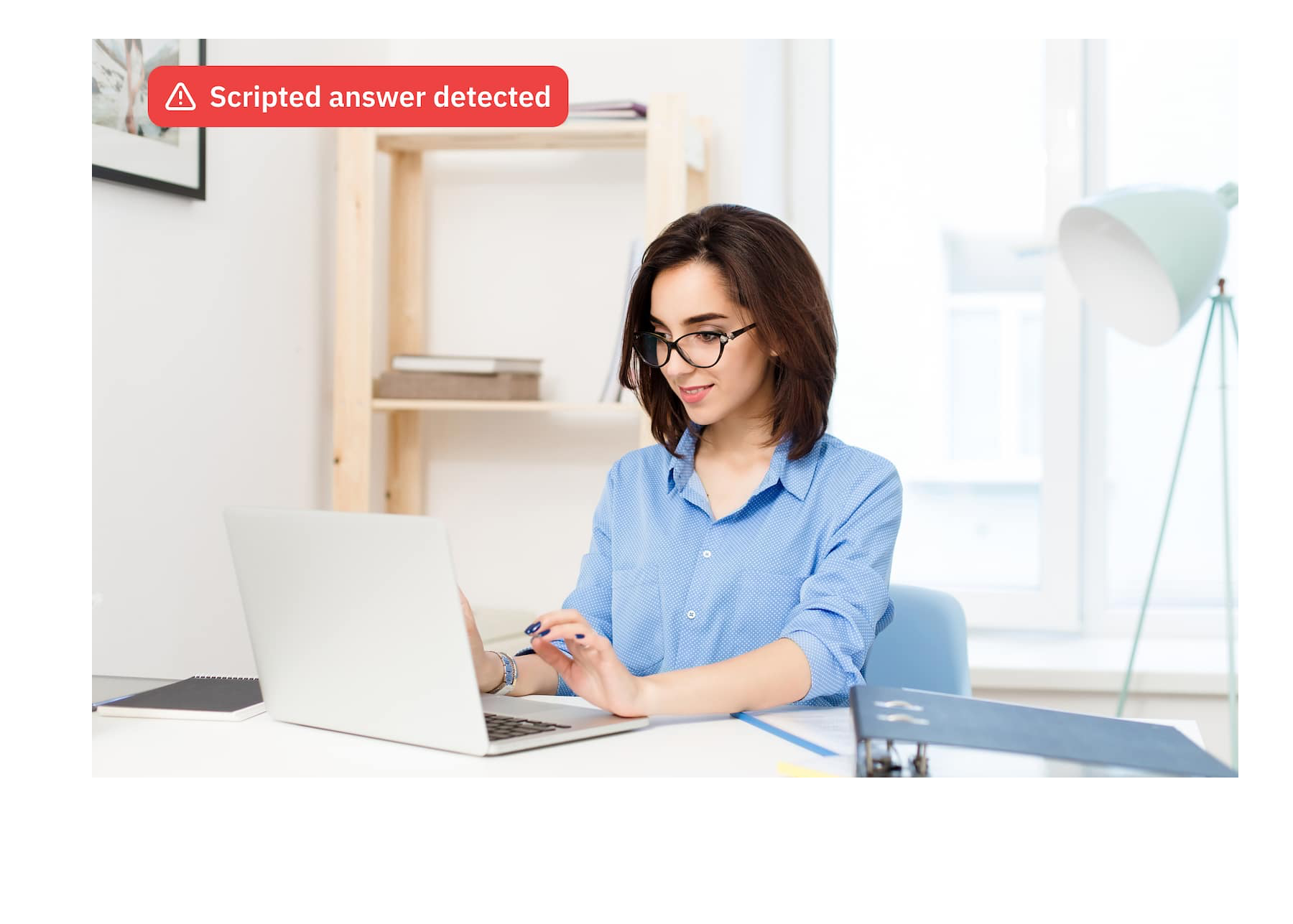
We’re not talking about elaborate schemes. Sometimes it’s someone whispering answers off-camera. Other times, it’s candidates pasting GPT-generated responses or consulting a second screen.
Cheat detection isn’t about us assuming the worst in people. It’s about protecting honest candidates, preserving trust, and giving hiring teams clarity in modern recruitment.
Common Ways Candidates Try to Cheat
Interview fraud isn’t always obvious. With tools like Cluely and FinalRound AI gaining popularity among candidates, and ChatGPT being the go to for many, it’s getting harder to tell who’s being honest. Here’s what it looks like today:
Scripted or AI-generated answers - Candidates prepare long responses in advance or use AI tools during the interview to get polished answers. Answers might sound great, but they don’t reflect real ability.
Off-screen coaching or second devices - Friends or family feed answers through whispers or notes. Some candidates consult a second monitor or phone just out of frame.
Hidden notes and visual prompts - Sticky notes on the wall, written cues taped around the monitor-these don’t show up on camera but guide the candidate throughout the interview.
Audio cues - Whispered tips, background voices, or telltale key-tapping sounds mid-response can indicate a candidate is receiving help.
Browser extensions or cheat tools - Some use plugins or dedicated cheating software that can inject prompts or autofill answers when certain keywords appear in the question.
What Real-Time Detection Looks Like
It’s not just about recording and reviewing interviews later. Real-time analysis helps surface potential issues as they happen, without disrupting the candidate experience.
1. Video Behavior Monitoring
AI tracks unusual head movements, long glances off-screen, or behavior that suggests someone is reading from notes off-screen. These subtle cues, when repeated, trigger flags for review.
2. Audio Detection
Monitoring for background voices, whispered coaching, or abrupt typing noises helps spot moments where the candidate might be getting outside help.
3. Environment Monitoring
Switching tabs, changing camera inputs, or accessing different devices during the interview can indicate cheating. Tracking this helps teams maintain consistency and integrity.
4. Timing and Pattern Analysis
Unnaturally fast responses, repeated phrases, or mechanical delivery can reveal scripted or AI-generated content. These are harder to catch manually, but real-time tools notice immediately.
Prevention Measures: Keeping Interviews Fair Without Killing the Experience
Effective cheat detection can run quietly in the background while balancing fairness with candidate comfort.
Be transparent - Let candidates know interviews are monitored for fairness. Most appreciate knowing the process is built to protect them, too.
Don’t auto-disqualify - A flag is not a verdict, and a system doesn’t make final decisions. Human reviewers should always be the final decision-makers. That context matters.
Keep reviews easy - Save interview recordings and provide time-stamped alerts so recruiters can easily review and understand why something was flagged.
Don’t punish honest mistakes - One glance away or a background noise doesn’t mean cheating. Smart systems flag patterns, not isolated blips.
Cheat Detection Tools: What to Look For in AI Candidate Screening
Here’s what matters most when choosing an AI screening platform with a cheat detection system:
- Real-time Analysis (not just post-interview flagging)
- Multi-format compatibility (voice, video, or text-based AI interviews)
- Human review controls (an AI Interviewer should support, not decide)
- ATS and workflow integration (so alerts don’t become another inbox)
- Minimal friction for candidates (no invasive scanning or clunky requirements)
The best tools keep your process honest while preserving the pace and quality of hiring, especially when leveraging virtual interview platforms.
How HeyMilo AI Supports Fair Interviews
HeyMilo’s AI cheat detection is designed to help recruiting teams protect fairness and spot red flags, without disrupting the experience.
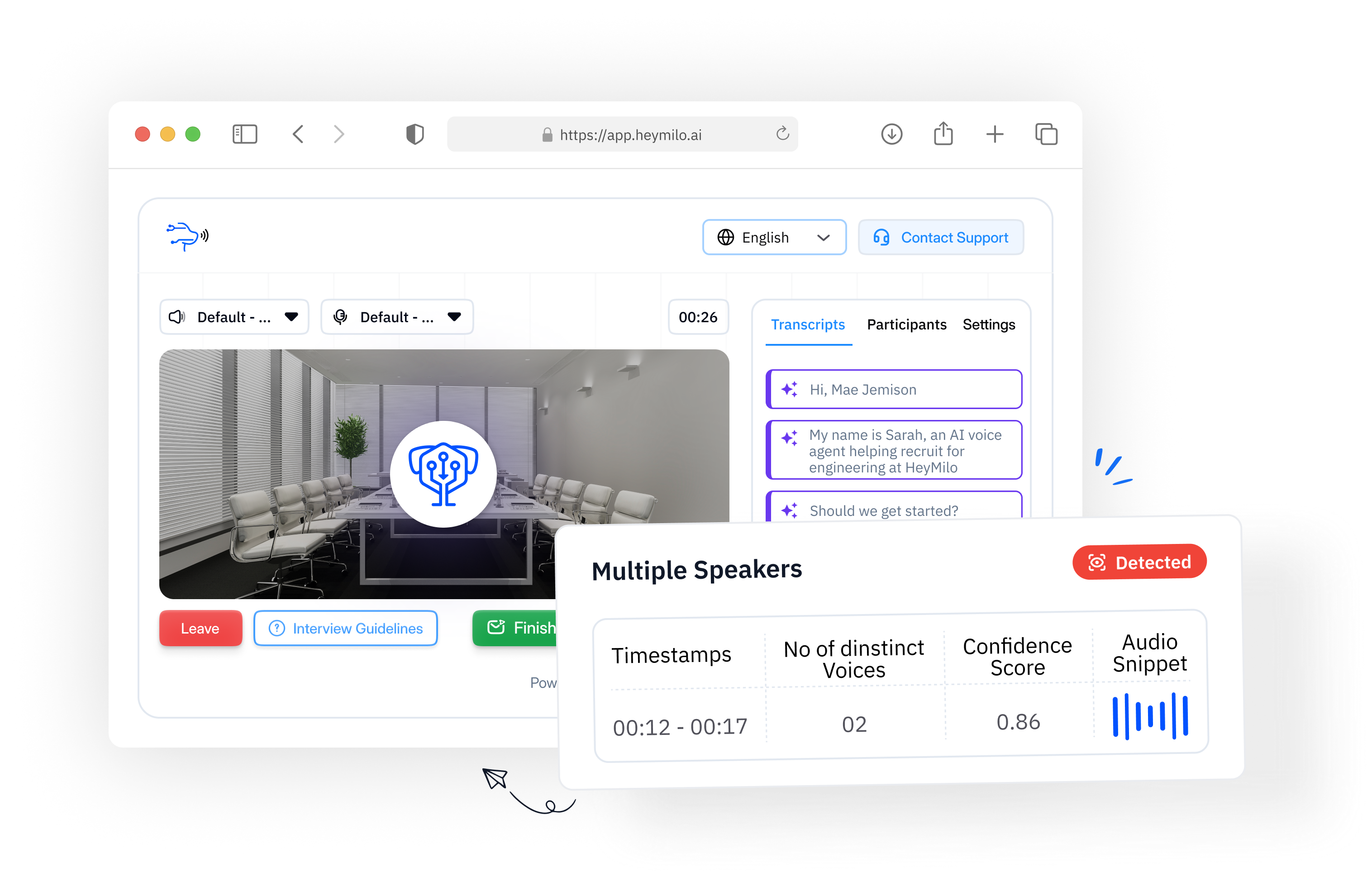
Live behavioral monitoring/real-time analysis flags potential cheating signals as interviews happen, like repeat glances off-screen, sudden tab switching, rapid-fire answers, or background audio interruptions.
Voice and video signal analysis detects deepfake patterns, multiple speakers, or responses that follow an unnatural script to add clarity without interfering with the experience.
Environment tracking catches moments where candidates may be switching devices, toggle hardware, or appear to be collaborating with someone off-camera.
Smart flagging helps teams spot repeated suspicious behavior while avoiding false alarms. Not just from one-off background noise or glances.
HeyMilo’s cheat detection does not change how candidates are scored or screened. Every interview is time-stamped, reviewable, and clearly flagged, so recruiters get transparency without needing to replay everything manually. And candidates are never auto-disqualified.
Your recruiters always make the final decision. It works in the background to give your team more visibility. The goal is to add helpful context so teams can better understand each candidate’s responses and make more informed decisions.
If you’re building a hiring process that’s fair, fast, and reliable, explore HeyMilo’s AI cheat detection for smarter candidate screening.
Ready to transform your hiring?
See how HeyMilo can help you screen candidates faster and more effectively.